

Shipping is not a back-end task.
It is a profit decision.
In 2026, resellers can no longer afford to guess on weight, assume carriers are the same, or treat all marketplaces equally. Carrier rate increases, dimensional enforcement, return policies, and platform-specific shipping rules have changed how online sellers must think.
If you sell online — whether part-time, full-time, or just getting started — your shipping strategy directly impacts your margins, your buyer experience, and your long-term sustainability.
This guide breaks down what resellers actually need to understand about carriers, packaging, marketplace rules, and free supply programs — marketplace by marketplace.
We are also going deeper into this topic live this Friday on YouTube with special guest Desiree Lynn. You can set your reminder here:
https://www.youtube.com/watch?v=UmEUFfZaugw
Let’s start with the big picture.
Why Shipping Strategy Matters More in 2026
Carriers have tightened dimensional weight rules. Residential and rural surcharges are more aggressive. Platforms enforce weight tiers more strictly. Returns, especially on eBay, must be factored into your pricing.
Shipping is no longer about “printing a label.” It is about:
- Margin protection
- Return risk management
- Packaging cost control
- Marketplace optimization
- Buyer psychology
Where you ship something can determine whether you win or lose money.
Shipping Strategy by Marketplace
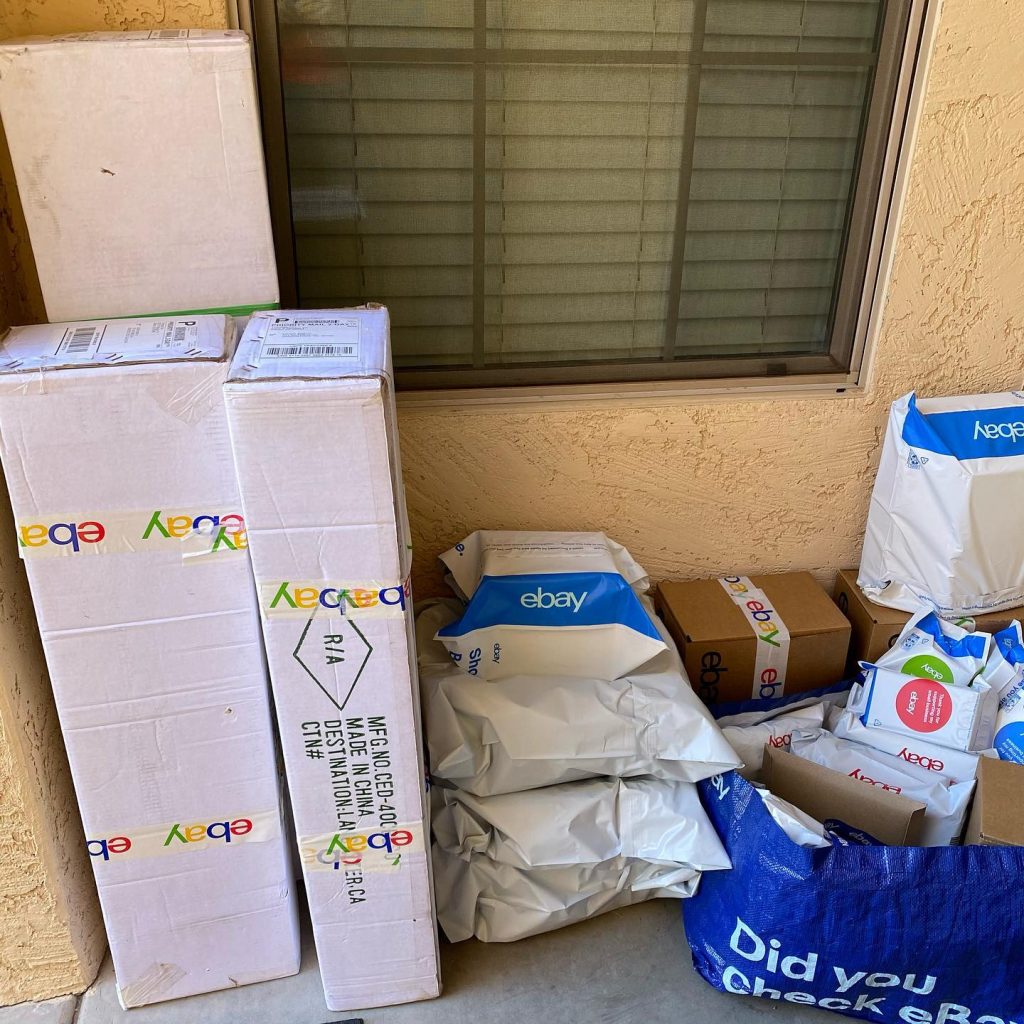
eBay: Maximum Flexibility Requires Maximum Awareness
eBay gives sellers full control.
You can use USPS, UPS, FedEx, calculated shipping, flat shipping, free shipping, third-party tools like Pirate Ship or Veeqo, and international programs like eBay International Shipping.
That flexibility is powerful — but it requires discipline.
Where Resellers Win on eBay
- Lightweight items under 1 lb using USPS Ground Advantage.
- Mid-weight items (5–20 lbs) where UPS often beats USPS.
- Dense small packages using cubic pricing (through tools like Pirate Ship).
- International sales using eBay International Shipping to eliminate overseas return risk.
Where Resellers Lose on eBay
- Guessing dimensions.
- Ignoring residential surcharges.
- Offering free returns without building the cost into pricing.
- Not planning for return frequency in certain categories.
- Using one carrier for everything out of habit.
eBay rewards informed sellers. It punishes guesswork.
Poshmark: Flat-Rate Advantage for Apparel Sellers
Poshmark’s $6.49 shipping (up to 5 lbs) creates a powerful advantage for clothing resellers.
There is no dimensional math. No zone confusion. No carrier comparison needed.
Where Resellers Win on Poshmark
- Heavy clothing (coats, sweaters, jeans bundles).
- Multi-item bundles under 5 lbs.
- Sellers who leverage free shipping supplies inside the app.
Poshmark now allows sellers to order eligible shipping supplies directly within the app, reducing supply cost even further.
Where Resellers Lose on Poshmark
- Single lightweight items that appear expensive due to flat shipping.
- Items over 5 lbs requiring additional weight upgrades.
- Non-apparel or oversized items.
If you sell heavier apparel and are not using Poshmark strategically, you may be leaving margin behind.
Mercari: Tier-Based Shipping Requires Precision
Mercari operates on weight tiers and offers USPS, UPS, and FedEx options.
It rewards sellers who understand exact weights and dimensions.
Where Resellers Win on Mercari
- Lightweight items.
- Sellers who double-check tier placement.
- Sellers who use the “Best Rate” option carefully.
- Those who factor in built-in shipping protection.
Where Resellers Lose on Mercari
- Incorrect weight input.
- Dimensional surprises.
- Underestimating bundles.
- Ignoring tier jumps.
Mercari penalizes incorrect shipping. It rewards precision.

Depop: Simplicity with Weight Limits
Depop uses weight-tiered USPS labels and currently operates with no seller fee in the U.S.
Where Resellers Win on Depop
- Lightweight apparel.
- Single-item sales.
- Sellers benefiting from lower overall fee structure.
Where Resellers Lose on Depop
- Items just over weight thresholds.
- Bundles without built-in shipping caps.
- Heavy or oversized goods.
Depop is simple. But simplicity still requires awareness.
Etsy: Flexible but Seller-Managed
Etsy allows sellers to set calculated or flat shipping and use USPS, UPS, or external carriers.
This flexibility is powerful — but requires active management.
Where Resellers Win on Etsy
- Sellers who understand calculated shipping.
- Sellers who pad slightly to avoid undercharge issues.
- Sellers who factor international risk appropriately.
Where Resellers Lose on Etsy
- Relying blindly on calculated shipping.
- Ignoring dimensional weight.
- Offering free shipping without margin math.
Etsy does not manage shipping for you. You must manage it.
Whatnot: Shipping Psychology Drives Volume
Whatnot uses a capped shipping model that encourages buyers to add more items once they have paid initial shipping.
This model increases average order value and favors small-to-mid-weight items.
If you sell collectible, lightweight, or bundle-friendly inventory, shipping structure on Whatnot can increase buyer confidence and spending.
Free Supply Programs Most Resellers Overlook
Shipping supplies impact margin just as much as labels.
Poshmark
- Free supplies available.
- Now orderable directly inside the app.
eBay
- Quarterly shipping coupon for store subscribers.
- Basic, Premium, and Anchor store levels qualify.
- Must redeem each quarter.
If you have an eBay Store and are not using your coupon, you are leaving free money unused.
USPS
- Free Priority Mail supplies.
- Must use correctly for the service selected.
UPS
- Free supplies for qualifying account holders.
- Typically tied to Express or volume accounts.
- Not unlimited — usage is monitored.
Unorthodox but Smart Supply Strategies
- Reusing clean retail boxes.
- Local business box sourcing.
- Community supply swaps.
- Facebook Marketplace “moving boxes” listings.
- Office buildings that discard quality packaging.
Supply cost leakage adds up. Even $0.75 per order multiplied across hundreds or thousands of orders becomes significant.
The Real Question Every Reseller Should Ask
- What do I sell most?
- What is my average shipment weight?
- Which marketplace protects my margin for that item?
- What is my return risk?
- What is my packaging cost per order?
- Am I using the right carrier — or just the one I’m used to?
Shipping strategy is not about loyalty to a carrier.
It is about protecting your business.
Watch the Shipping Deep Dive on YouTube
We’re going deeper into this topic live on YouTube this Friday with reseller guest Desiree Lynn.
Set your reminder or watch here:
https://www.youtube.com/watch?v=UmEUFfZaugw
If you’re seeing this after Friday, the replay will be available on our YouTube channel. You can still watch and leave your questions in the comments — we’re always happy to respond.