
Online consignment selling has evolved from a casual side hustle into a serious business model. In 2026, buyers expect professional listings, fast fulfillment, and competitive pricing — and consignors expect transparency, communication, and results.
If you’ve been thinking about starting (or improving) an online consignment business, this guide walks through what actually works today: realistic commissions, marketplace strategy, pricing, agreements, and how to scale without burning out.
What Is Online Consignment Selling?
Online consignment selling means listing and selling items on behalf of someone else — clients, friends, family, or local sellers — in exchange for a percentage of the sale.
Instead of investing cash upfront in inventory, you invest time, expertise, and systems.
In today’s resale market, successful consignors are not just “posting items online.” They are:
- Researching comps before pricing
- Listing across multiple marketplaces
- Managing inventory carefully to avoid double sales
- Communicating clearly with consignors
This is no longer optional — it’s expected.
Setting Consignment Terms That Actually Work
One of the biggest mistakes new consignors make is being too flexible at the start.
Commission Structure (2026 Reality)
Most successful online consignors operate within these ranges:
- 30–40% commission for standard items
- 40–50% commission for high-touch categories (luxury, vintage, collectibles)
Your commission reflects:
- Listing creation
- Photography and item prep
- Marketplace expertise
- Ongoing price management
- Customer service and fulfillment
If you underprice your commission, you are subsidizing someone else’s inventory with your labor.
Fees & Payouts
Be explicit about:
- Who covers marketplace selling fees
- When payouts occur (after delivery confirmation, returns window, etc.)
- Minimum payout thresholds
Clear terms protect relationships — especially with friends and family.
Choosing the Right Marketplaces
In 2026, relying on a single marketplace limits visibility and increases risk.
Most consignors now use multiple platforms based on item type:
- eBay: strong for collectibles, electronics, vintage, and long-tail items
- Poshmark: fashion, accessories, lifestyle brands
- Mercari: fast turnover, lower friction listings
- Vestiaire Collective: authenticated luxury items
- Depop: trend-driven and younger buyers
Using more than one marketplace isn’t about more work — it’s about smarter exposure. Crosslisting tools help keep inventory synced so an item sold in one place doesn’t cause issues elsewhere.
Preparing Inventory for Sale
Professional presentation matters more than ever.
Photos
Buyers expect clarity and honesty. At minimum, include:
- Front and back views
- Brand and size tags
- Close-ups of fabric or materials
- Clear photos of flaws
Five strong photos outperform ten mediocre ones.
Condition Disclosure
Always disclose wear, damage, or alterations. Accurate condition descriptions:
- Reduce returns
- Protect your seller accounts
- Build long-term trust with consignors

Pricing Items for Sell-Through (Not Just Likes)
Pricing is the single biggest driver of success in online consignment selling.
What Works Now
- Research sold comps, not asking prices
- Price competitively from day one
- Avoid pricing high “just to see what happens”
Items priced correctly early tend to sell faster and require fewer price reductions.
Psychology Matters
Small pricing differences can impact buyer behavior. Clean, market-aligned pricing often outperforms inflated prices with room for negotiation — especially on fast-moving platforms.
Consignment Agreements: Non-Negotiable
A written agreement protects both sides.
Your agreement should clearly outline:
- Commission percentage
- Pricing strategy
- Where items will be listed
- Storage duration
- What happens if items don’t sell
- How and when payouts occur
This is especially important when consigning for friends or family. Treat every arrangement like a business — because it is.
Shipping, Returns, and Fulfillment
Shipping expectations have tightened across marketplaces.
Best practices include:
- Accurate weights and dimensions
- Tracked shipping
- Secure packaging
- Clear return policies
Some consignors build shipping costs into pricing; others pass them through. The key is consistency and clarity.
Scaling an Online Consignment Business
Once you move beyond a handful of clients, systems matter more than effort.
Inventory Management
Track:
- Where each item is listed
- Pricing history
- Sale status
- Payouts owed
Manual tracking breaks quickly at scale.
Consistent Listing
Regular listing activity keeps your inventory visible and helps maintain steady sales. Even a small daily listing habit outperforms occasional bulk uploads.
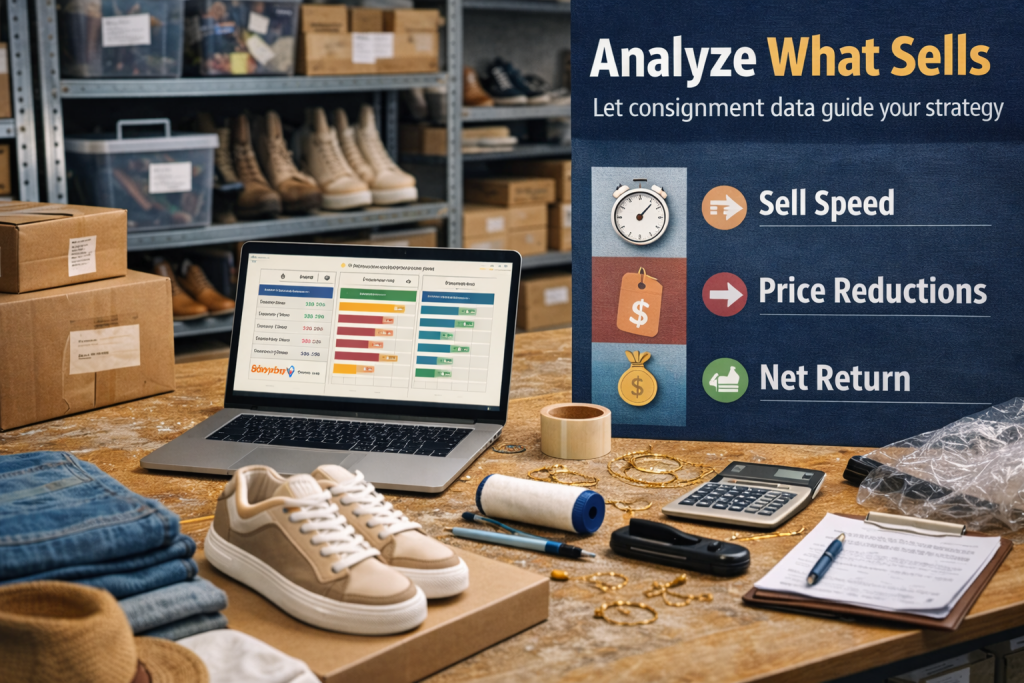
Analyze What Sells
Not all categories perform equally. Review which items:
- Sell fastest
- Require the fewest price reductions
- Generate the highest net return
Let data guide what you accept on consignment.
Final Thoughts
Online consignment selling in 2026 rewards sellers who operate professionally, price realistically, and communicate clearly.
It’s not about listing more — it’s about building a repeatable, sustainable workflow that benefits both you and your consignors.
When done right, consignment can be one of the most scalable and low-risk ways to grow a resale business.